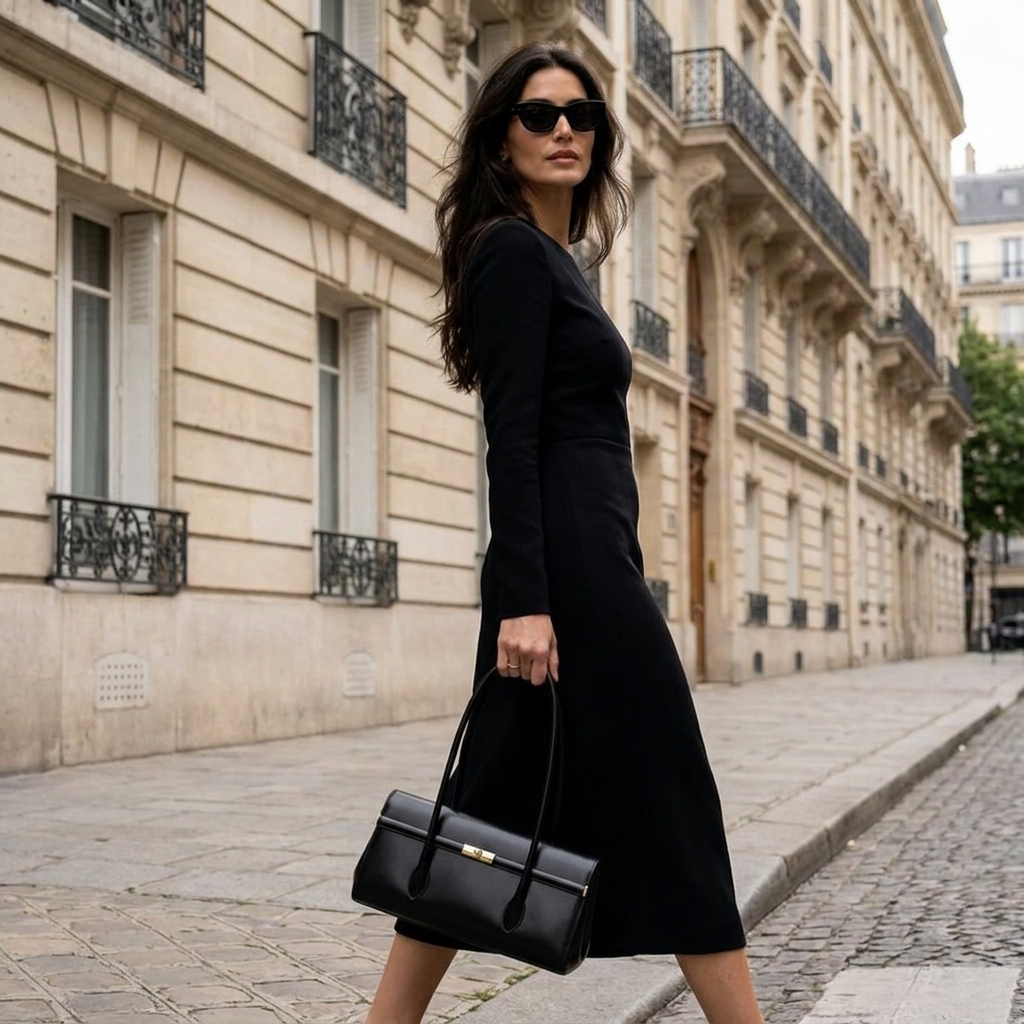
What to Wear to Earn the Promotion: Dressing for the Role Before They Give You the Title

There is a thing that nobody tells you when you start.
They tell you to work hard. They tell you to be early and stay late and speak up in meetings and document everything and build relationships and be visible and be reliable and be, above all, indispensable. They give you all of this advice freely and with genuine intention, and most of it is true.
What nobody tells you is that the room makes a decision about you before you open your mouth.
Not a final decision. Not an irreversible one. But a first one, the kind that takes approximately seven seconds and operates entirely below the level of conscious thought, and which sets the temperature of every conversation that follows. The room looks at you and decides, without meaning to, what kind of person you are. What level you occupy. Whether you are here, or whether you are almost here.
And the room, it turns out, reads clothes the way it reads everything else.
The Wednesday That Changed Everything
Her name is not important. What is important is the Wednesday.
She has been at the firm for four years. By every measurable standard she is exceptional. Her work is precise, her preparation is thorough, and she has the kind of instinct for a room that cannot be taught and rarely appears twice in the same department. She has handled cases that the partners quietly considered unwinnable and delivered them with a stillness that made senior colleagues put down their pens and pay attention.
She knows she is good. The partners know she is good.
The problem is that knowing and communicating are two entirely different things, and she has, for four years, been communicating something slightly beneath what the work deserves.
Not wrong. Not unprofessional. Simply slightly beneath. The way a note can be correct on paper and slightly flat in performance. The way something can be right and still not quite land.
She does not realize this until a Wednesday morning when a colleague — less experienced, less effective, objectively less prepared — walks into the partners' meeting wearing a suit the colour of dark slate that sits on her shoulders with the quiet authority of something made to be worn in rooms exactly like this one, carrying a bag that the partners' eyes move to and away from in the same half-second, and is offered the senior position that our protagonist has been working toward for two years.
She sits at her desk for a long time after that.
She is not angry, exactly. She is clear, which is sometimes worse.
Something has to change. Not the work. The work has always been exceptional. Something else. Something that the room registers before the work is ever presented. Something that operates in that seven-second window before she has said a single word.
The Problem Nobody Wants to Say Out Loud
Here is the truth that professional environments communicate in whispers and culture and the slow accumulation of who gets chosen for what.
Competence is the entry requirement. It is not the differentiator.
At a certain level of professional environment — the law firm, the bank, the consultancy, the institution where the decisions are made and the careers are built and the titles mean something real — everyone in the room is competent. Most of them are exceptional. The differentiators are subtler. The way someone carries a meeting. The way they present an idea. The way the room responds to them before the idea is even fully formed.
And part of that — a significant, unspoken, never-written-in-any-handbook part of that — is how they look when they walk in.
This is not about vanity. It is not about spending. It is about signal. About the way that clothes, at this level, function as a form of professional communication that operates faster and deeper than language. About the way that a woman who dresses for the role she is aiming for rather than the role she currently holds sends a message to every room she enters that the room receives and acts on before anyone in it has consciously noticed.
The colleague who got the promotion understood this. She had understood it for a long time. She had simply never been told it was allowed to matter.
The Saturday
The protagonist goes shopping on a Saturday. Not urgently, not frantically, not in the way of someone trying to fix something broken. Deliberately. With the particular focus of someone who has decided to stop waiting to be seen and start making it easier for the room to see her correctly.
She is not looking for a costume. She is not looking to become someone she is not. She is looking for the clothes that match the version of herself that exists fully in her own mind and has been, for four years, slightly underrepresented in the room.
She finds, after a long morning and a great deal of trying on and putting back, a Giorgio Armani blazer in deep charcoal. She puts it on and stands in front of the mirror and something shifts. Not in the mirror, exactly. In her. The shoulders sit with an authority that does not feel borrowed. The fabric moves the way good fabric moves, which is to say with intention rather than accident. She looks like someone who has already been given the title and is simply waiting for the paperwork to catch up.
She buys it. She buys the trousers that go with it. She goes home and hangs everything in the wardrobe and stands in the doorway for a moment looking at it, the way you look at something that feels like a decision rather than just a purchase.
The following Monday, she wears it to a client meeting that three partners are also attending.
The senior partner says, afterward, in the corridor, almost as an aside: you should be in the room when we discuss the restructuring next week.
She has been trying to get into that room for eight months.
What the Room Reads and Why It Matters
There is a reason that certain pieces of clothing carry authority in professional environments and others do not, and it has nothing to do with the label and everything to do with what the label represents.
A suit from a house like Giorgio Armani or Brunello Cucinelli or Max Mara is not simply well made. It is made with a particular understanding of how fabric interacts with the body in motion, how a shoulder seam communicates confidence, how the weight of a good wool blend changes the way a person carries themselves across a long and demanding day. It is made with the understanding that the person wearing it will be in rooms where the details are noticed even when they are not named.
This is why the colleague walked into that partners' meeting and the room responded before she spoke. The suit was not doing her job for her. It was creating the conditions in which her competence could be received at its actual value. It was removing the friction between what she was and what the room understood her to be.
This is what clothes can do, at the right level. Not perform authority. Enable it.
The Wardrobe: Building the Case
The Suit and the Blazer
The blazer is the single most powerful item in a professional wardrobe, and it is powerful not because it is formal but because it is precise. A well-cut blazer on a woman in a corporate environment communicates, without words or effort, that she knows what room she is in and has dressed accordingly. That she is not here by accident. That she has thought about this.
A Brunello Cucinelli blazer in cream or warm stone carries this quality in its most understated register. The fabric is exceptional — the kind that reads as expensive even to people who cannot name why — and the cut is soft enough to feel modern while being structured enough to hold presence in a formal room. For women whose professional environment values quiet authority over obvious status, this is one of the strongest investments available.
Balmain approaches the same territory differently. The silhouette is more precise, the structure more visible, and the overall effect is of someone who has made a decision about the room and is comfortable with the consequences. For women in environments where confidence is not just permitted but expected — the trading floor, the senior partnership, the boardroom where deals are finalized rather than discussed — Balmain ready-to-wear delivers the visual authority that matches the professional one.
Tom Ford suits and tailored pieces carry a cinematic precision that suits women who want their professional appearance to feel like a complete statement rather than a collection of careful choices. There is nothing tentative about Tom Ford. This suits women who are past the point of tentative.
For women in more classically formal environments — the old law firms, the established banks, the institutions where tradition is part of the currency — Max Mara tailoring carries exactly the right register. Clean lines, exceptional fabric, a palette of charcoal and navy and deep cream that reads authoritative without aggression. A Max Mara coat worn into a morning meeting communicates something that no business card can: that the woman wearing it has been dressing at this level for long enough that it feels entirely natural.
Dolce & Gabbana ready-to-wear suits the woman who has reached the level where expressing herself is not a risk but a right. The tailored pieces from the house carry a precision that suits formal environments while the design language communicates a personality that the work alone cannot always convey. For women who want their professional wardrobe to feel personal rather than institutional, Dolce & Gabbana delivers that distinction without sacrificing authority.
Saint Laurent is for the woman who has stopped asking for permission. The silhouettes are sharp, the palette tends toward the serious, and the overall effect is of someone who understands the room completely and has decided to dress slightly above it, not as arrogance but as aspiration — the aspiration of someone who already knows where she is going and is simply dressed for the destination.
Gucci suits women whose professional environment has evolved past the purely conservative. The creative industry partner, the senior counsel at a modern firm, the executive in the kind of organisation where originality is part of the job description. Gucci ready-to-wear carries fashion authority alongside professional credibility, which is exactly the combination that suits women operating at the intersection of both.
Celine delivers restraint as a form of power. The pieces are clean to the point of severity in the best possible sense — every unnecessary element removed, what remains entirely precise. For women who dress on the principle that the strongest statement is the most considered one, Celine ready-to-wear is the wardrobe of someone who has nothing to prove.
The Dress
There are days when a suit is three decisions and a dress is one, and the dress is better.
A Valentino dress on a difficult Thursday — the kind with a presentation in the morning and a senior review in the afternoon and a conversation with HR somewhere in between — is a single, complete, entirely considered thing. The cut is feminine without being decorative. The fabric carries the room without effort. The woman wearing it does not need to think about whether she looks right. She knows. And knowing changes how she walks into every room for the rest of the day.
A Givenchy dress in black carries a different quality. Where Valentino has warmth, Givenchy has architecture — the kind of structured, precise femininity that suits women who want their appearance to communicate competence and intention in the same moment. For a senior presentation, a client dinner, a morning when the stakes are high and the margin for doubt is zero, Givenchy delivers.
Prada dresses carry the particular authority of a house that has always understood that modern professional dressing is not about looking formal. It is about looking exactly right. The cuts are considered, the fabric is exceptional, and the overall effect is of someone who shops with the same precision she brings to everything else, which is its own form of professional communication.
For the woman whose career lives at the intersection of corporate and creative, a Loewe dress carries quiet intelligence. The proportion is always considered, the material always interesting, and the overall effect is of someone who sees the world in a way that is more interesting than the furniture in the room she is standing in.
The Shoes: What the Floor Hears Before the Room Does
There is a particular sound that professional environments make when the right person is approaching. It is the sound of heels on a marble lobby floor at eight forty-five in the morning, and it communicates, before anyone has looked up, that someone with somewhere important to be has arrived.
The shoes matter more than most women allow themselves to admit, partly because admitting it feels frivolous and partly because the people making decisions about their careers have been noticing shoes for years without mentioning it.
A Prada heel on a promotion morning is not a luxury. It is a precision instrument. The profile is clean, the leather sounds right on a hard floor, and the overall effect carries from the moment she enters the building to the moment the meeting ends. For women who need their footwear to work across a twelve-hour day without asking for anything in return, Prada heels consistently deliver both the appearance and the endurance.
A Saint Laurent pump is the shoe of a woman who has decided. The pointed toe, the considered heel height, the leather that develops character rather than simply wearing out — these are qualities that suit professional environments where the decision to dress at a certain level communicates something real about how the person within the clothes views both herself and the room.
Ferragamo shoes carry decades of professional dressing in their construction. The Vara bow flat, the block heel in calfskin, the pump that has appeared in the wardrobe of every serious professional woman of the last forty years — these are not fashion choices. They are the choices of someone who understands that quality compounds, that the right shoe worn consistently becomes part of how a professional identity is built and read and remembered.
For the woman who needs height and staying power simultaneously, Jimmy Choo heels offer construction that supports extended wear alongside the kind of visual authority that suits formal professional environments. These are not shoes that ask the rest of the outfit to work harder. They carry their own weight, which is the only kind of shoe worth wearing on a day that matters.
Sergio Rossi belongs in the wardrobe of every professional woman who has not yet discovered it. Italian craftsmanship at its most understated. The kind of shoe that reveals itself slowly to people who understand shoes and is remembered long after louder choices have been forgotten. For women in environments where the details are noticed precisely because they are not announced, Sergio Rossi is a very considered choice.
Bottega Veneta loafers and flat shoes carry the same quiet authority in the professional wardrobe that the house carries everywhere. The intrecciato leather, the considered proportion, the sense of something made rather than produced — these qualities read in a conference room even when they cannot be named, which is the precise effect that promotion dressing requires.
On Fridays, in the kind of firm where brilliance is the standard and the dress code has always been a suggestion rather than a rule, a pair of Golden Goose leather trainers worn with sharp tailored trousers communicates something that a heel cannot: that the woman wearing them is confident enough in her position that she does not need the height. That authority, for her, is not something she puts on in the morning. It is simply something she has.
The Bag: The Second Argument
A bag carried into a partners' meeting is a second argument running parallel to the first. It does not speak. It does not need to. It simply sits on the table or hangs from the shoulder or rests on the floor beside the chair, and it communicates, to everyone in the room who is paying the kind of attention that senior professionals pay without appearing to, something true about the woman who chose it.
She puts a Fendi tote on the table at the Monday morning meeting where the restructuring is being discussed and something in the room adjusts, subtly, the way rooms adjust when someone arrives at exactly the right level. The bag is not the reason. But it is part of the reason. It is part of the accumulated evidence that the room is processing in real time, building a case about who she is and what level she belongs to, and the bag is a piece of that evidence that she chose deliberately.
A Givenchy structured bag carried into a client presentation communicates, before the presentation begins, that the woman holding it is operating at the level the client expects. This matters more than it should, which means it matters, and the women who have risen furthest in the institutions where rising is genuinely difficult tend to be the ones who understood this early.
Brunello Cucinelli bags suit the woman whose professional environment rewards understatement. The leather is exceptional. The proportion is considered. The overall effect is of someone who buys things because they are good rather than because they are visible, which is its own form of professional communication in environments where everyone is watching and no one is supposed to be.
For women operating across multiple professional contexts — the client meeting and the internal review and the dinner that follows and the early flight the morning after — a Michael Kors structured work bag delivers with a consistency that more overtly luxurious alternatives sometimes do not. The organisation is right, the leather is right, and the overall effect is professional without being institutional, which is the precise balance that a demanding schedule requires.
A Burberry bag in a formal professional environment carries heritage credibility that suits institutions where the walls have seen everything and are quietly impressed by very little. The leather quality, the hardware, the overall sense of something built for longevity — these are qualities that land well in rooms where longevity is itself a form of authority.
Tory Burch structured bags offer a more accessible entry into this conversation that does not sacrifice the professional register. For women building a professional wardrobe across multiple categories simultaneously, Tory Burch bags deliver designer quality and clear brand identity at a price point that allows the investment to spread further.
The Accessories: The Details That Decide It
There is a version of promotion dressing that is entirely about the clothes. And there is a more sophisticated version that understands that the clothes are the foundation and the accessories are where the personality lives.
A Victoria Beckham belt at the waist of a blazer that was already excellent. A Ferragamo scarf folded into a jacket pocket on the morning of the review. A Bottega Veneta card holder placed on the table during a meeting in a way that is entirely practical and also, somehow, entirely intentional.
These are the details that the room notices without knowing it has noticed. The details that accumulate across months of consistent, considered dressing into a professional reputation that is partly about the work and partly about the way the work is presented.
The watch matters. It always matters, in professional environments, more than anywhere else, because a watch at this level communicates a relationship with time itself. A Tissot on the wrist of a woman who has been working toward a specific title for three years reads as intention. As someone who knows exactly what she is doing and how long she is prepared to do it.
Dolce & Gabbana accessories suit the woman who has reached the level where expressing herself through the details is not a risk but a reward. Earrings that would have seemed too much eighteen months ago are, at the right moment in a professional trajectory, simply part of who she is. The room that once would have raised an eyebrow will now simply note, quietly, that she has arrived somewhere.
Karl Lagerfeld accessories carry a professional intelligence that suits women who move between creative and corporate environments. A Karl Lagerfeld bag or scarf in a boardroom sends a small signal to anyone who understands it: that the woman carrying it sees the room in more interesting categories than the room was designed to contain.
Swarovski jewellery in a professional environment does something subtle and important. It catches the light at the moment the room is paying attention and reminds everyone present, without words, that the woman wearing it made a choice this morning. That she thought about this. That she thinks about everything.
Max Mara scarves and wraps, carried through a cold-morning commute and folded over the back of a chair in a warm office, communicate continuity. The kind of professional who invests in things that last and wears them for years and builds, slowly and deliberately, the visual language of someone who belongs at the level she is aiming for.
The Morning It Happens
She is in the lift on a Thursday when the senior partner gets in at the fourth floor and the doors close and there are twelve floors to go and he says, in the way that senior partners say things that they have been thinking about for a while, that the partnership committee has been discussing her trajectory and they would like to talk about next steps.
She says, in the way of someone who has been ready for this for a long time, that she would like that very much.
The doors open. She walks out.
The suit is a Brunello Cucinelli. The shoes are Ferragamo. The bag, resting in the crook of her elbow with the patient confidence of something that has been in exactly this building for exactly this moment before, is a Givenchy.
None of this is why she got the promotion.
But none of it is unrelated, either.
The Honest Ending
The promotion comes because of the work. It always comes because of the work.
But the work exists in a world where rooms make decisions in seven seconds, where the details communicate before the words do, where dressing for the role you want rather than the role you have is not a manipulation but a clarity — the clarity of someone who has decided, with full seriousness, that she is going and is prepared to dress accordingly.
For women who want authenticated luxury fashion from globally recognized fashion houses — across ready-to-wear, shoes, bags, and accessories — LeMarca brings the full professional wardrobe into one place. Without the boutique markup. Without the compromise.
Just the right piece, for the right room, worn by the right woman at exactly the right moment.
The rest, as it turns out, was always going to be hers.