What to Wear to the Interview: Dressing for the Job Before They Give It to You

There is a morning that exists in the life of every ambitious woman that feels different from all the others.
It arrives with the alarm, usually earlier than necessary, in a room that is slightly too quiet and a stomach that is slightly too awake. The coffee is made before the mind has fully arrived. The wardrobe is open. And standing in front of it, in the particular silence of a high-stakes morning, is the question that nobody in the career advice books ever quite answers honestly.
Not what to say. Not how to sit. Not which version of the prepared answer to lead with.
What to wear.
The Night Before
Her name, for the purposes of this story, is irrelevant. What is relevant is the role.
It is the kind of role that does not come available often. A senior position at a firm with a name that means something, in a city where names mean everything, in an industry where the interview panel will have seen a hundred candidates before her and will see a hundred after and will make their decision, in the end, on a combination of factors that the job description does not list and the recruitment process does not acknowledge.
She has prepared. She has prepared in the way that only someone who genuinely wants something prepares — which is to say completely, obsessively, at the expense of sleep and social plans and the ordinary rhythms of a week. She knows the firm's history and its current positioning and the names of the three people interviewing her and the cases they have worked on and the articles they have written and the professional positions they have publicly taken.
She is, by every measure that can be measured, ready.
And then she opens the wardrobe and the preparation stalls. Because preparation, it turns out, is not the same as presentation. Because knowing everything you need to say is not the same as walking into a room and having the room, before you have said a single word, decide that you belong there.
She stands in front of the wardrobe for a long time.
She is wearing, in her imagination, seventeen different outfits simultaneously, and none of them feel exactly right. The black trouser suit she bought two years ago is correct but slightly tired, the kind of correct that communicates effort without communicating standard. The wrap dress she wears for client dinners is too relaxed for a morning panel. The blazer she loves makes her feel like herself, but the trousers she owns do not match it the way they should, and the combination produces something that is almost right, which in a room full of people assessing details is functionally the same as wrong.
She closes the wardrobe.
She sits on the edge of the bed.
And then she does something she will later describe, to the colleague she eventually becomes close enough with to tell this story to, as the best professional decision she ever made before she walked through the door.
She decides to dress not for the interview. She decides to dress for the job.
The Distinction That Changes Everything
There is a version of interview dressing that is about rules. Dark colours. Conservative cuts. Nothing that distracts. Nothing that announces. The advice that has been given to women entering professional environments for so long that it has calcified into received wisdom without anyone checking whether it is still true.
And there is another version entirely.
It is the version that understands that an interview panel, particularly at the senior level, is not looking for someone who has read the dress code and complied with it. They are looking for someone who already belongs in the room. Someone who walks in and makes the room feel, in some way that cannot be entirely articulated, that the position has been filled before the questions have begun.
This is not about ignoring formality. It is about wearing formality as if it is native rather than performed. As if the blazer is simply how she gets dressed in the morning, not something she put on to pass a test.
This is the distinction. And it is the distinction that the wardrobe has to solve.
The Morning Of
She goes, the evening before the interview, to find the thing she does not yet own but already knows she needs.
Not frantically. Not in the way of someone trying to fix a problem at the last minute. In the way of someone who has decided, with the same precision she brings to her professional work, to solve this particular problem properly.
She finds a Brunello Cucinelli blazer in a shade that sits between warm gray and something almost like dawn. She puts it on in the fitting room and the quality of the fabric registers immediately — not loudly, not obviously, but in the way that genuine luxury registers, which is as a kind of rightness, a sense that the thing was made to be worn by someone who takes both herself and her work seriously. The cut is soft enough to feel modern and structured enough to hold presence. She looks, in the mirror, like the version of herself she has been working toward.
She buys it. She finds the trousers. She goes home.
The next morning she gets dressed in the particular silence of a high-stakes morning and something is different. Not in the mirror. In her.
She is not wearing something to pass a test. She is wearing something that matches who she already is. And that distinction — almost imperceptible from the outside, absolutely fundamental from the inside — changes how she walks to the station, how she enters the building, how she sits down across the table from three people who are about to decide her professional future.
She is offered the role on the Friday.
The senior partner mentions, in the feedback passed through the recruiter, that she presented with unusual confidence. That she seemed entirely at ease. That she struck the panel as someone who already understood the level.
She does not tell anyone about the blazer.
But she never forgets it.
The Clothes: Building the Interview Wardrobe
The Suit and the Blazer: The Foundation
A suit, worn correctly, is not conservative. It is precise. It communicates, before a word is spoken, that the woman wearing it understands the room she is entering and has dressed accordingly. That she respects the occasion enough to have thought about it. That she is not here by accident.
A Giorgio Armani suit in deep charcoal or navy carries this quality in its most authoritative form. The shoulders sit with the kind of intention that cannot be manufactured at a lower price point. The fabric moves with the body rather than against it. For women interviewing at institutions where the walls have absorbed decades of high-stakes decisions, a Giorgio Armani suit communicates, in the language those walls understand, that she belongs.
Max Mara tailoring carries a different register — warmer, slightly softer, the authority of someone who has been dressing at this level long enough that it feels entirely natural. A Max Mara blazer over a clean trouser in cream or camel suits interview environments where the culture is established and the expectation is elegance rather than severity.
Balmain ready-to-wear suits women interviewing for roles where confidence is not just permitted but required. The structure is visible, the silhouette is deliberate, and the overall effect is of someone who has made a decision about the room before she entered it. For senior roles in competitive environments — the investment bank, the top-tier consultancy, the law firm where the partners are assessing presence as much as competence — Balmain delivers the visual authority that the work alone cannot always establish in forty-five minutes.
Celine blazers and tailored pieces carry restraint as a form of power. Every unnecessary element has been removed. What remains is entirely precise. For women whose interview strategy is built around the principle that the strongest impression is the most considered one, Celine ready-to-wear is the wardrobe of someone who has nothing to prove and knows it.
Tom Ford suits and structured pieces carry a cinematic authority that suits women interviewing for roles where the stakes are visible in the room. There is nothing tentative about Tom Ford. The cuts are exact, the palette serious, and the overall effect is of someone who dressed this morning with the specific intention of being the most prepared person in the building.
For women whose target institution values heritage and discretion over fashion credentials, Burberry tailoring carries exactly the right kind of establishment credibility. The construction is reliable, the quality immediately apparent, and the overall effect is of someone whose professional standards and personal standards operate at the same level.
The Dress: When One Piece Is the Whole Argument
There are interview mornings when the suit feels like too many moving parts. When what the occasion requires is a single, entirely considered piece that does not ask the rest of the wardrobe to work.
A Givenchy dress in black on an interview morning is a complete sentence. Structured, precise, feminine in the way that power is feminine — not decorative, not softened, simply exactly what it is. For women interviewing at institutions where the panel expects to be impressed, Givenchy ready-to-wear arrives at that expectation already.
Saint Laurent dresses carry the confidence of someone who has stopped negotiating with rooms about whether she belongs in them. The silhouettes are clean, the intention is clear, and the overall effect is of someone who understood the brief and dressed slightly above it — not as arrogance, but as the quiet declaration of someone who already knows the answer.
A Prada dress on an interview morning communicates the particular intelligence of a house that has always understood that modern professional dressing is about being exactly right rather than obviously formal. The cuts are considered without being conservative, the fabric exceptional without being theatrical, and the overall effect is of someone who approaches every detail of her professional life with the same precision.
For women interviewing at firms where individual expression is part of the culture — the creative consultancy, the modern law firm, the institution that hires for originality rather than conformity — a Gucci dress carries fashion authority and professional credibility simultaneously, which is exactly the combination that suits women who want the room to understand, from the first moment, that they are both exceptional and themselves.
Valentino dresses carry a softer power that suits interview environments where warmth is as important as authority. The fabric moves well, the silhouette is considered, and the overall effect is of someone who takes both herself and the occasion seriously without making the seriousness the only thing in the room.
The Shoes: The Sound of Arriving
There is a sound that serious professional buildings make at eight forty-five on a weekday morning. It is the sound of heels on a lobby floor, and it communicates, to everyone who hears it, that someone with somewhere important to be has arrived.
The shoes carry more information than most women allow themselves to acknowledge, partly because acknowledging it feels like too much and partly because the information they carry is real regardless of whether it is acknowledged.
A Prada heel on an interview morning is not a luxury. It is precision. The profile is clean, the leather sounds right on a hard floor, and the overall effect carries across a conference table in the particular way that well-made shoes carry — not loudly, not obviously, but as part of the accumulated impression of someone who has thought about every detail of this morning.
Ferragamo shoes carry the professional register of a house that has been making shoes for serious women for decades. The Vara, the block heel, the pointed pump in calfskin — these are not fashion choices. They are the choices of someone who understands that quality compounds, that the right shoe worn on the right morning becomes part of how a professional impression is built and retained. For an interview at an institution where the details are noticed and the standards are high, Ferragamo consistently delivers both the appearance and the endurance.
A Saint Laurent pump communicates, to a panel that is assessing everything in the room, that the woman wearing it has made decisions about her life at a certain level and this interview is one of them. The pointed toe, the considered heel height, the leather that reads as serious — these are qualities that suit women who want their footwear to confirm the impression the rest of the outfit is already making.
For women whose interview is at a firm where the culture values considered modernity over traditional formality, Bottega Veneta loafers or flat shoes carry the quiet authority of someone who is confident enough in her position that she does not need the height. That authority, worn this way, is its own argument.
Jimmy Choo heels suit the interview that runs long and the evening that follows — the second meeting with the hiring partner over dinner, the drinks that materialize from a successful first conversation. The construction supports extended wear, the heel profile is professional, and the overall effect carries from the morning lobby to wherever the day ends up taking her.
Sergio Rossi belongs in the interview wardrobe of every woman who has not yet discovered it. Italian craftsmanship at its most understated. The kind of shoe that the panel cannot quite name but cannot quite forget, which is precisely the effect that the best interview shoes produce.
The Bag: The Third Person in the Room
There are two people in an interview room. The candidate and the panel.
And then there is the bag.
It sits on the table or rests against the chair leg or is placed, with a precision that is either deliberate or has become habitual through years of professional dressing, in exactly the right position. And it communicates, to everyone in the room, something true about the person who chose it.
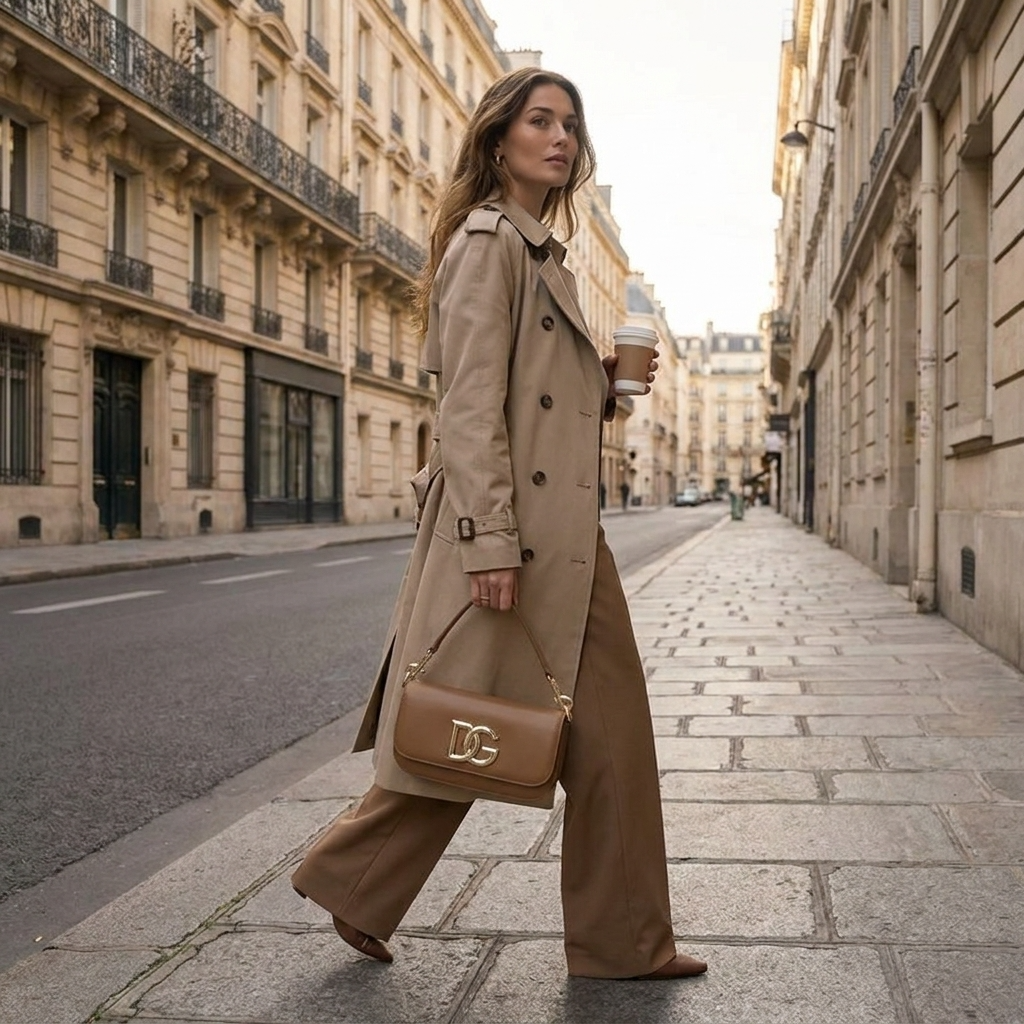
A Fendi bag placed on a conference table during a senior interview communicates, before the conversation has properly begun, that the woman carrying it operates at a certain level as a matter of course rather than as a performance. The craftsmanship is visible. The proportion is right. The hardware carries the quiet authority of something made to be in exactly this kind of room.
A Givenchy structured tote on the shoulder of a woman walking into a law firm interview carries a professional register that suits the institution she is entering. The leather quality, the structured silhouette, the overall sense of something considered rather than convenient — these qualities read in a room even when they cannot be named, which is the precise effect that an interview bag requires.
For women interviewing at institutions where discretion is itself a credential, a Brunello Cucinelli bag communicates the particular authority of someone who chooses quality without needing anyone to notice. The panel will notice. They always do. They simply will not mention it, which is exactly how the best professional impressions work.
Burberry bags carry establishment credibility that suits British professional environments particularly well. For women interviewing at firms where the institution itself has a strong identity, a Burberry bag communicates that she understands and respects that identity, which is its own form of cultural intelligence.
A Jil Sander bag at an interview is the choice of a woman whose aesthetic and professional instincts are the same thing — precise, uncluttered, built around the principle that what remains after everything unnecessary has been removed is always more powerful than what was there before. For panels that are assessing judgment as much as credentials, this communicates.
Michael Kors structured work bags offer a professional register and genuine quality at a price point that allows the investment to sit alongside everything else the interview wardrobe requires. For women building the complete picture across multiple categories simultaneously, Michael Kors delivers consistency and credibility without demanding the entire budget.
The Accessories: Where Personality Meets Precision
The interview outfit is the argument. The accessories are the character witness.
They do not need to shout. They need to be right. And being right, in an interview context, means being the detail that the panel notices without being able to articulate why, that settles into the accumulated impression of someone who thinks carefully about everything she does, including how she gets dressed in the morning.
A Victoria Beckham belt at the waist of a blazer that was already excellent adds the particular quality of intentionality — the sense that nothing in this outfit happened by accident, that every element was chosen, that the woman wearing it approaches the details of her professional presentation with the same precision she brings to her work.
A Ferragamo scarf folded into a jacket pocket on the morning of the interview. A Bottega Veneta card holder placed on the table with the quiet confidence of someone who does not need to announce herself. A Max Mara wrap carried into a building where the air conditioning runs cold and the meetings run long.
The watch. Always the watch.
In a professional interview, a watch communicates a relationship with time that goes beyond the practical. A Tissot on the wrist of a woman who has prepared completely and arrived exactly when she said she would reads as someone who understands the value of other people's time, which is one of the most important things a panel can know about a future colleague before the conversation has properly started.
Dolce & Gabbana accessories suit women interviewing at institutions where individual expression is read as confidence rather than risk. An earring that catches the light at the right moment. A detail that tells the panel something true about who she is, which is ultimately what every interview is trying to establish.
Karl Lagerfeld accessories carry a professional intelligence that lands well in environments where the culture is sophisticated enough to read them. A Karl Lagerfeld piece at an interview is a small signal — barely visible, entirely intentional — that the woman carrying it sees the world in more interesting categories than the average candidate.
Swarovski jewellery in an interview context does something small and significant. It catches the light. It reminds the room, at the precise moment when first impressions are being formed and filed, that she made a choice this morning. That she thinks about things. That she is the kind of person who considers the details.
The Question She Was Never Asked
She gets the job.
The feedback, when it comes, mentions her preparation. Her clarity of thought. The way she handled the technical questions and the way she navigated the more ambiguous ones. The sense the panel had, from very early in the conversation, that she would fit the culture of the firm.
The culture of the firm.
Nobody on the panel could explain exactly what they meant by that. But what they meant, in the part of the assessment that happens below the level of conscious thought, in the seven-second window before the first question was asked, was that she walked into the room looking like she already belonged there.
The blazer was Brunello Cucinelli. The trousers were clean and precisely cut. The shoes were Ferragamo, and they sounded right on the lobby floor. The bag, resting in her lap during the interview with the patient confidence of something that had been chosen rather than grabbed, was a Givenchy.
None of this is why she got the job.
But none of it is separate from why she got the job, either.
The Honest Truth About Interview Dressing
The interview is won by the work. By the preparation and the thinking and the years of building something real in a field that demanded it.
But the work exists in a world where rooms make decisions in seven seconds. Where the details communicate before the words do. Where dressing for the role you want rather than the role you have is not a trick or a manipulation. It is a form of clarity — the clarity of someone who has decided, with full seriousness, that she is going, and is dressed accordingly.
For women who want authenticated luxury fashion from globally recognized fashion houses — across ready-to-wear, shoes, bags, and accessories — LeMarca brings the complete interview wardrobe into one place. Without the boutique markup. Without the compromise.
Just the right piece. For the right room. For the woman who has already done the hard part.
The rest was always going to be hers.